
Electric vs. Propane Forklifts: Which Is Better for Your Warehouse?


Choosing the right forklift can have a major impact on productivity, operating costs, maintenance, and workplace conditions. For many warehouse managers, the decision comes down to electric vs. propane forklifts.
Both power types have proven their value, but the better option depends on your warehouse environment, workload, operating hours, and infrastructure. Electric forklifts are often a strong choice for indoor applications, while propane forklifts can provide flexibility for operations that require quick refueling and indoor/outdoor use.
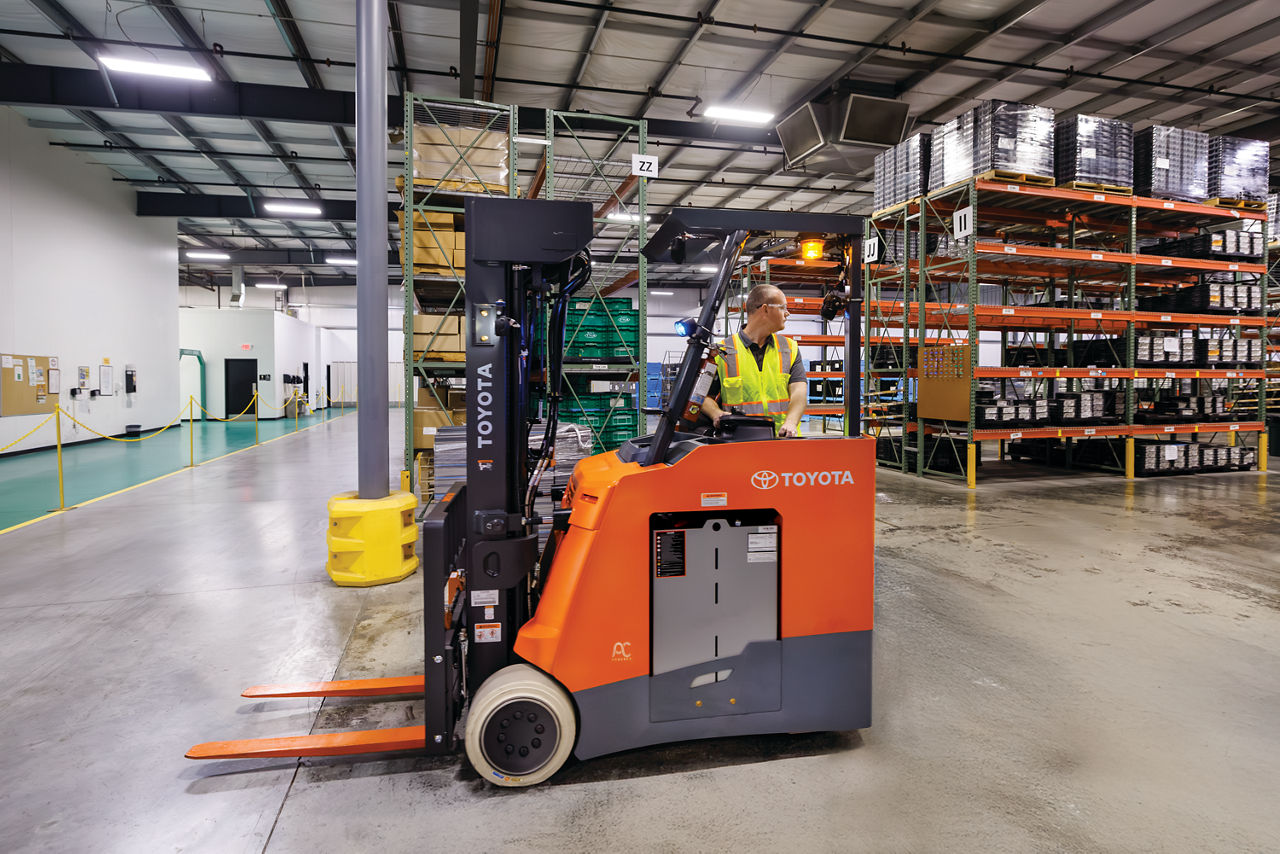
Electric forklifts are powered by rechargeable batteries and produce no direct tailpipe emissions while operating. That makes them particularly attractive for enclosed warehouses, distribution centers, food facilities, and other environments where air quality and noise levels are important.
Electric models can also have fewer maintenance requirements because they do not rely on a traditional internal-combustion engine. However, battery charging, charging infrastructure, and operating schedules need to be carefully planned—especially for facilities running multiple shifts.
Modern battery technology is also changing the equation. Lithium-ion systems can support faster charging and opportunity charging, making electric equipment increasingly practical for demanding warehouse operations.

Propane forklifts remain popular because they offer operational flexibility. A propane cylinder can be replaced relatively quickly, allowing equipment to return to work without waiting for a battery to recharge.
They can also be a practical choice for facilities where forklifts regularly move between indoor and outdoor areas or where charging infrastructure is limited. However, propane equipment produces combustion emissions, so the operating environment and ventilation requirements should be considered carefully.
For operations with demanding duty cycles, outdoor travel, or limited charging opportunities, propane may still provide an advantage.

Purchase price is only one part of the decision. Warehouse managers should consider total cost of ownership, including energy, maintenance, batteries, chargers, propane cylinders, downtime, and expected equipment life.
Electric forklifts may require a higher initial investment, but their operating and maintenance costs can be lower over time. Propane forklifts may have a lower initial purchase cost and provide faster refueling, but ongoing fuel and engine maintenance costs need to be included in the calculation.
The smartest choice isn't necessarily the forklift with the lowest sticker price. It's the forklift that delivers the best return for your specific application.
Warehouse 101 Pro Tip
Don't choose your forklift based on fuel type alone.
Before buying, document how your equipment actually operates. Consider:
-
How many hours does each forklift run per shift?
-
How many shifts do you operate?
-
Is the forklift primarily indoors or outdoors?
-
Do you have adequate charging infrastructure?
-
How quickly must equipment return to service?
-
What loads and elevations are involved?
-
What are your long-term maintenance and energy costs?
A forklift that fits your actual duty cycle can help reduce unnecessary equipment expenses and improve productivity.

Consider a Used Electric Forklift
If you're looking to control upfront equipment costs, buying a quality used electric forklift can be a smart alternative to purchasing new.
One option available from Warehouse Buyers Club is the Used Raymond 5400 Order Picker with a Working Battery Included. The unit is a used Raymond 5400 electric order picker equipped with a working 24-volt battery. The listed specifications include a 7,864-pound truck weight, 1,085 AH maximum rated battery capacity, and a nominal width of 14.12 inches.
Raymond's 5000 Series order pickers are designed for warehouse order-picking applications, with electric configurations built around productivity, ergonomics, maintainability, and efficient operation.
You can view the Used Raymond 5400 Order Picker with Working Battery Included at Warehouse Buyers Club.
The Bottom Line
So, is an electric or propane forklift better for your warehouse?
For primarily indoor operations where air quality, noise, energy efficiency, and long-term operating costs matter, an electric forklift can be an excellent fit. Propane forklifts may be the better choice when rapid refueling, outdoor capability, and operational flexibility are priorities.
The key is matching the equipment to your warehouse—not simply choosing the most popular power source.